
Introduction
Operating an EOT (Electric Overhead Travelling) crane without performing proper pre-operation safety checks can significantly increase the risk of equipment failure, unexpected production downtime, costly repairs, and serious workplace accidents. Since EOT cranes are designed to lift and transport extremely heavy loads in demanding industrial environments such as manufacturing plants, warehouses, steel mills, construction sites, and fabrication units, even a minor defect in a critical component can lead to unsafe operating conditions, damage to valuable materials, or severe injuries to workers.
A thorough pre-operation inspection is one of the most effective ways to ensure that the crane is functioning safely and efficiently before starting any lifting operation. Regular inspections not only help operators detect potential issues at an early stage but also reduce maintenance costs, improve operational reliability, and ensure compliance with workplace safety standards and industrial regulations. Making these inspections a part of the daily routine creates a safer work environment while minimising the chances of unexpected breakdowns during critical lifting tasks.
Before every shift, operators should carefully inspect essential crane components such as the Pendant Push Button Station, Crane Control Panel, Limit Switches, Wire Rope, Hook Assembly, Radio Remote Controls, Braking System, Hoist Mechanism, End Carriages, and other visible structural parts. These routine inspections help identify early signs of wear, electrical faults, loose connections, corrosion, mechanical damage, abnormal noises, or malfunctioning safety devices before they develop into serious operational problems.
Ignoring these checks can result in load instability, brake failure, uncontrolled crane movement, wire rope damage, electrical hazards, and expensive downtime that affects both productivity and worker safety. On the other hand, spending just a few minutes on a systematic inspection before each shift can greatly improve crane performance, extend the equipment’s service life, and reduce the likelihood of emergency repairs.
In this comprehensive guide, we’ll walk through the Top 10 Safety Checks Before Operating an EOT Crane, explain why each inspection is essential, highlight the risks of neglecting these safety measures, and share practical best practices that can help improve workplace safety, reduce unexpected downtime, enhance lifting efficiency, and maximise the overall lifespan of your EOT crane.
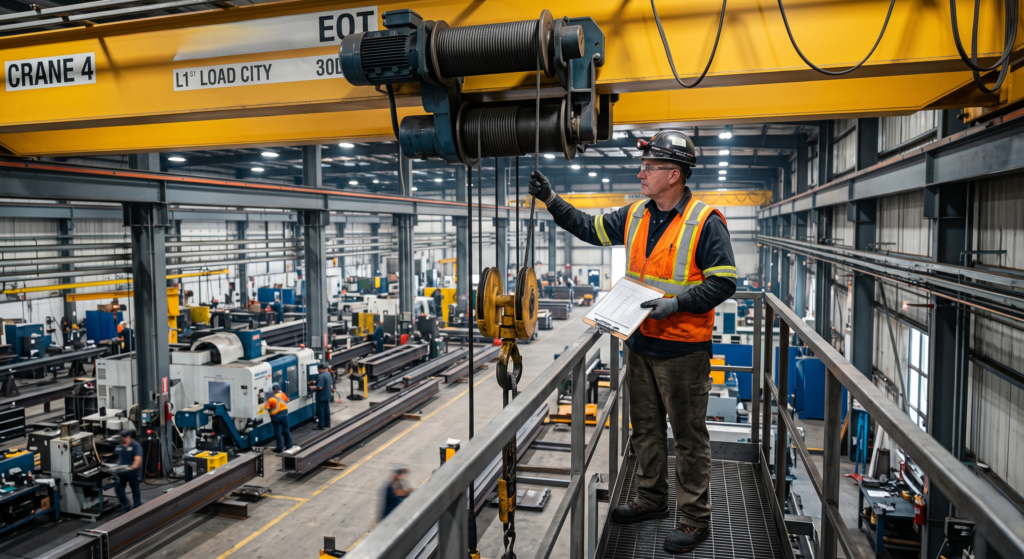
A crane operator performing a pre-operation safety inspection before starting an EOT crane shift.
Why Pre-Operation Safety Checks Are Essential for EOT Cranes
Pre-operation safety checks are the foundation of safe and efficient crane operations. Before an EOT crane begins lifting heavy loads, every critical electrical and mechanical component should be inspected to ensure it is functioning correctly. Even a minor fault—such as a damaged pendant station, worn wire rope, faulty limit switch, or malfunctioning emergency stop button—can quickly escalate into a serious safety hazard if left unnoticed.
Industrial cranes often operate continuously in challenging environments where they are exposed to dust, vibration, moisture, high temperatures, and heavy workloads. Over time, these conditions can affect the performance of crane components, making routine inspections an essential part of every shift. Identifying small issues before crane operation not only improves workplace safety but also reduces unplanned downtime, repair costs, and production losses.
Whether your facility uses a single workshop crane or multiple heavy-duty EOT cranes, implementing a structured pre-operation inspection routine ensures that operators can work with confidence while protecting both personnel and valuable equipment.
Common Safety Risks Caused by Poor Pre-Operation Inspections
- Damaged or unresponsive Pendant Push-Button Stations.
- Faulty emergency stop circuits that fail during emergencies.
- Worn crane brakes reducing stopping and holding performance.
- Malfunctioning Rotary, Lever, or Roller Limit Switches.
- Frayed wire ropes or damaged hook safety latches.
- Loose electrical connections inside the crane control panel.
- Low battery or communication issues in radio remote controls.
- Obstructions or unsafe conditions in the crane travel path.
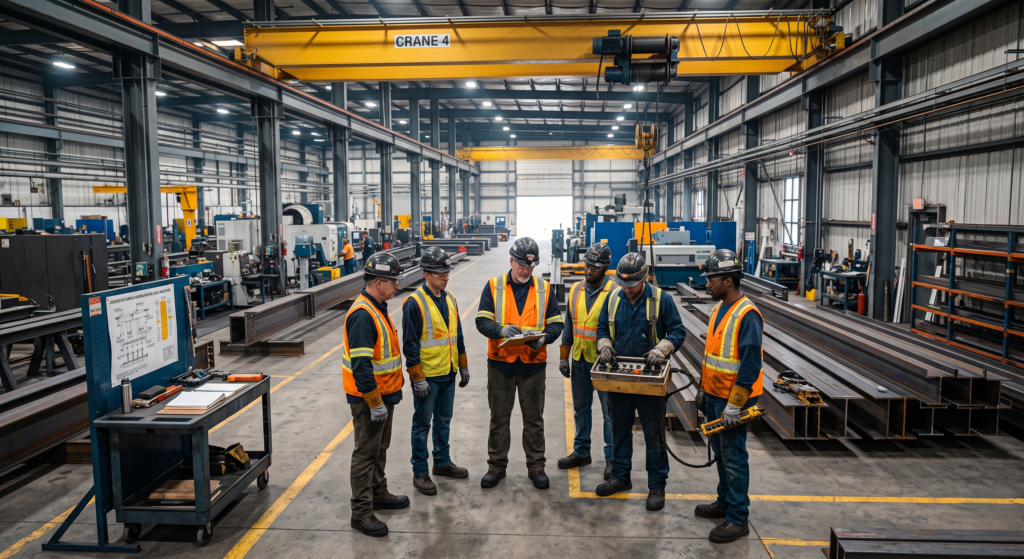
A structured pre-operation safety briefing helps operators identify potential crane hazards before lifting operations begin.
Top 10 Safety Checks Before Operating an EOT Crane
1. Inspect the Pendant Push Button Station
The Pendant Push Button Station is the primary interface between the crane operator and the crane. Every lifting, lowering, trolley movement, bridge travel, and emergency stop command is initiated through this control device. Since it is handled continuously throughout the workday, the pendant station is naturally exposed to dust, moisture, accidental impacts, cable strain, and general wear.
Before operating the crane, carefully inspect the pendant station to ensure all buttons respond correctly, the enclosure is free from cracks or damage, and the pendant cable is securely connected. Any fault in the pendant station can lead to delayed responses, unintended crane movement, or complete loss of control, creating a serious safety risk for both operators and nearby personnel.
Facilities that use high-quality Speed-O-Controls Pendant Push Button Stations benefit from rugged construction, ergonomic button layouts, and dependable performance. However, like any industrial control equipment, they should still be inspected before every shift to maintain maximum safety and operational reliability.
Common Issues to Look For
- Cracked or damaged pendant housing.
- Sticky, loose, or unresponsive push buttons.
- Worn, cut, or twisted pendant cable.
- Loose cable entry or damaged strain relief.
- Faded or missing button markings.
- Moisture, dust, or oil contamination inside the enclosure.
Best Inspection Practices
- Press every control button individually to verify smooth operation.
- Test the Emergency Stop button before crane operation begins.
- Inspect the pendant cable along its entire visible length for damage.
- Ensure the pendant hangs freely without twisting or excessive tension.
- Clean the outer surface to remove dust, grease, or moisture.
- Report and replace any damaged pendant station immediately instead of attempting temporary repairs.
2. Test the Emergency Stop (E-Stop) Circuit
The Emergency Stop (E-Stop) circuit is one of the most critical safety features of any EOT crane. It is specifically designed to immediately stop all crane movements during an emergency, helping prevent accidents, equipment damage, and injuries. Whether the crane is operated through a Pendant Push Button Station or a Radio Remote Control, the emergency stop function must respond instantly whenever activated.
Before starting daily lifting operations, operators should always test the E-Stop circuit to verify that it interrupts crane motion immediately and safely. A delayed response, failed stop command, or malfunctioning emergency circuit should never be ignored, as it can significantly increase the risk of serious workplace incidents.
Modern Speed-O-Controls Pendant Push Button Stations, Radio Remote Control Systems, and Crane Control Panels are designed with reliable emergency stop functionality. However, regular functional testing remains essential to ensure these safety systems continue to perform as intended under real operating conditions.
Common Problems to Look For
- Emergency Stop button does not lock properly after being pressed.
- Crane continues moving for a noticeable delay after E-Stop activation.
- Worn, damaged, or loose emergency stop push button.
- Loose wiring or faulty electrical connections within the emergency stop circuit.
- Emergency stop button fails to reset correctly after use.
- Physical damage, dust, or moisture affecting switch performance.
Best Inspection Practices
- Press the Emergency Stop button before beginning the first lifting operation of every shift.
- Confirm that all crane motions stop immediately after activation.
- Reset the Emergency Stop and verify that normal crane controls are restored correctly.
- Inspect the emergency stop button for cracks, loose mounting, or signs of excessive wear.
- Check all associated wiring and electrical connections during scheduled preventive maintenance.
- Report and repair any abnormal E-Stop operation before returning the crane to service.
3. Verify Crane Brake Performance Before Lifting Operations
The braking system is one of the most critical safety components of an EOT crane, responsible for stopping, holding, and controlling suspended loads safely during lifting operations. Before every shift, operators should verify that the crane brakes engage and release smoothly without any unusual delay, vibration, or abnormal noise. Even if the brake appears to function normally, subtle performance issues can indicate developing mechanical or electrical problems that require immediate attention.
A properly functioning brake should securely hold the load in position without slipping and respond consistently to every lifting and lowering command. Any sign of reduced braking efficiency can compromise load control and increase the risk of equipment damage or workplace accidents. Whether your crane is equipped with Speed-O-Controls SDM Brakes, SMG Brakes, or MDT Brakes, a quick operational check before production begins is an essential part of every daily inspection routine.
Common Problems to Look For
- Delayed brake engagement or release.
- Unusual grinding, squealing, or scraping noises.
- Brake slipping while holding a suspended load.
- Excessive vibration during lifting or lowering.
- Burning smell or signs of overheating.
- Inconsistent braking performance between operating cycles.
Best Inspection Practices
- Operate the hoist without a load to confirm smooth brake engagement and release.
- Verify that the brake responds immediately to every control command.
- Listen carefully for unusual noises during brake operation.
- Check for visible signs of overheating, oil contamination, or mechanical damage.
- Ensure the brake holds the hook securely without drifting when stopped.
- Report any abnormal brake behaviour and remove the crane from service until the issue is resolved.
4. Inspect Crane Limit Switches for Proper Operation
Limit switches are essential safety devices that protect an EOT crane from exceeding its safe operating limits. They automatically stop the crane, hoist, or trolley when the predefined travel limit is reached, helping prevent collisions, over-travel, mechanical damage, and potential workplace accidents. A faulty limit switch may allow the crane to move beyond its designed range, creating unnecessary risks for both equipment and personnel.
Before operating the crane, operators should verify that all installed limit switches function correctly during normal crane movement. This includes Rotary Limit Switches, Lever Limit Switches, and Roller Limit Switches, depending on the crane’s design and application. High-quality Speed-O-Controls Limit Switches are engineered to provide reliable performance in demanding industrial environments, but routine inspections remain essential to ensure long-term operational safety and accuracy.
Common Problems to Look For
- The crane continues moving after reaching the travel limit.
- Damaged or bent limit switch lever or roller.
- Loose mounting brackets or hardware.
- Worn actuating mechanism causing inconsistent operation.
- Loose or damaged electrical wiring.
- Dust, moisture, or corrosion affecting switch performance.
Best Inspection Practices
- Test each limit switch before beginning lifting operations.
- Verify that crane motion stops immediately when the travel limit is reached.
- Inspect switch housings for cracks, damage, or loose mounting.
- Check all wiring and cable connections for signs of wear or corrosion.
- Remove dust, grease, or debris that could interfere with switch operation.
- Replace damaged or malfunctioning limit switches without delay.
5. Inspect the Wire Rope and Hook Assembly
The wire rope and hook assembly are among the most heavily loaded components of an EOT crane. They directly support and lift suspended loads, making their condition critical to overall crane safety. Continuous lifting operations expose these components to mechanical stress, bending, abrasion, corrosion, and fatigue. Even minor signs of wear can gradually reduce their strength and increase the risk of unexpected failure.
Before every shift, operators should carefully inspect the wire rope and hook assembly for visible damage, deformation, excessive wear, or loose safety components. Particular attention should be given to broken wire strands, flattened rope sections, corrosion, hook throat opening, and the condition of the safety latch. Any defect affecting the load-bearing capacity of these components should be addressed immediately before crane operation begins.
Common Problems to Look For
- Broken or frayed wire strands.
- Kinks, bird-caging, or flattened rope sections.
- Rust, corrosion, or inadequate lubrication.
- Bent or deformed crane hook.
- Worn or damaged hook safety latch.
- Excessive wear around the hook throat or lifting point.
Best Inspection Practices
- Visually inspect the entire visible length of the wire rope before each shift.
- Check the hook for cracks, deformation, or excessive wear.
- Ensure the hook safety latch closes completely and operates smoothly.
- Verify that the wire rope is properly seated on the drum and sheaves.
- Remove dirt and debris that may hide damage during inspection.
- Immediately replace any wire rope or hook that does not meet the manufacturer’s safety requirements.
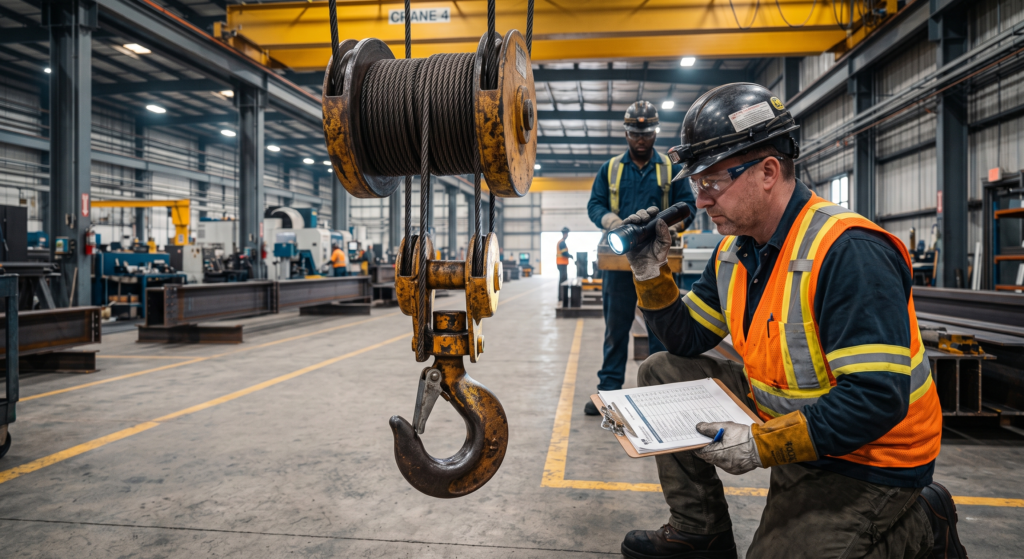
A thorough inspection of the wire rope and hook assembly helps identify wear before it develops into a serious lifting hazard.
6. Inspect the Crane Control Panel for Electrical Safety
The Crane Control Panel is the central control unit that manages all electrical operations of an EOT crane, including the hoist, trolley, long travel, braking system, and various safety devices. Since every crane movement depends on the proper functioning of the control panel, even a minor electrical issue can lead to unexpected interruptions, unsafe crane behaviour, or complete operational failure.
Before starting crane operations, the control panel should be visually inspected for any signs of overheating, loose wiring, damaged components, or moisture ingress. Operators should also ensure that all indicator lamps, control relays, contactors, circuit breakers, and protective devices are functioning correctly. Industrial-grade Speed-O-Controls Crane Control Panels are designed to deliver reliable performance in demanding operating conditions, but routine inspections remain essential for maintaining safe and efficient crane operation.
Common Problems to Look For
- Loose or burnt electrical terminals.
- Overheated contactors or relays.
- Damaged insulation or exposed wiring.
- Moisture, dust, or oil contamination inside the control panel.
- Warning indicators not functioning properly.
- Unusual burning smell or abnormal humming sounds.
Best Inspection Practices
- Perform a visual inspection of the control panel before energising the crane.
- Check that all panel doors are securely closed and properly locked.
- Verify that indicator lamps and status lights operate correctly.
- Inspect visible wiring for loose connections or damaged insulation.
- Keep the control panel clean, dry, and free from excessive dust accumulation.
- Report any electrical abnormalities immediately and allow only qualified personnel to perform repairs.
7. Test Radio Remote Controls for Reliable Communication (If Installed)
Many modern EOT cranes are equipped with Radio Remote Control Systems, allowing operators to control crane movements from a safe distance while maintaining a clear view of the load and surrounding work area. Compared to conventional pendant stations, radio remote controls improve operator mobility, increase productivity, and reduce exposure to hazardous lifting zones. However, since these systems rely on wireless communication, they must be tested before every shift to ensure reliable and uninterrupted operation.
Before lifting operations begin, operators should verify that the transmitter communicates correctly with the crane receiver and that every control command responds accurately. The emergency stop button, directional controls, battery condition, and communication range should also be checked. Speed-O-Controls Radio Remote Control Systems are designed for dependable industrial performance, but regular pre-operation testing remains essential to ensure maximum operational safety.
Common Problems to Look For
- Weak or discharged transmitter battery.
- Delayed response between the transmitter and crane.
- Buttons that are damaged, loose, or unresponsive.
- Physical damage to the transmitter housing.
- Intermittent signal loss or communication failure.
- Emergency Stop button not functioning correctly.
Best Inspection Practices
- Check the battery level before every shift.
- Test every control function while the crane is unloaded.
- Verify the Emergency Stop button operates immediately.
- Inspect the transmitter for cracks, loose buttons, or visible damage.
- Ensure the communication range remains stable throughout the operating area.
- Store the transmitter in a clean, dry, and protected location after use.
8. Verify Warning Devices and Safety Indicators
Warning devices and safety indicators play a vital role in preventing accidents during crane operations. Components such as warning horns, sirens, flashing beacon lights, overload indicators, and status lamps alert operators and nearby workers before and during crane movement. These safety devices improve awareness, especially in busy industrial environments where multiple machines and personnel are working simultaneously.
Before every shift, operators should verify that all warning devices function correctly and are clearly visible or audible throughout the operating area. A malfunctioning horn, defective beacon light, or inactive warning indicator can reduce situational awareness, increasing the risk of collisions, unsafe load movement, and workplace injuries. Ensuring these devices are operational is a simple but highly effective step toward maintaining a safe working environment.
Common Problems to Look For
- Warning horn or siren not producing sufficient sound.
- Flashing beacon lights not illuminating properly.
- Burnt or damaged indicator lamps.
- Loose electrical wiring or poor connections.
- Overload warning indicators not responding correctly.
- Dirt or dust obstructing warning lights.
Best Inspection Practices
- Test the warning horn before the first crane operation of each shift.
- Verify that beacon lights and visual indicators are clearly visible.
- Check overload indicators and fault warning lamps for proper operation.
- Inspect wiring for loose connections or visible damage.
- Clean beacon covers and indicator panels regularly for maximum visibility.
- Replace damaged bulbs, LEDs, or warning devices immediately.
9. Inspect the Crane Travel Path and Work Area
Before operating an EOT crane, it’s essential to ensure that the entire crane travel path and surrounding work area are free from hazards. Even if all crane components are functioning correctly, obstacles on the runway, unauthorised personnel within the lifting zone, poor housekeeping, or improperly stored materials can create serious safety risks during crane movement.
Operators should carefully inspect the bridge travel path, trolley movement area, and the floor below the crane before starting any lifting operation. Confirm that the load path is clear, warning signs and barricades are in place where required, and all workers are aware of the planned lifting activity. A clean and organised work area not only improves safety but also allows operators to manoeuvre loads with greater precision and confidence.
Common Hazards to Look For
- Obstructions on the crane runway or travel path.
- Workers standing beneath or near suspended load areas.
- Poor housekeeping causing trip or collision hazards.
- Materials or equipment blocking crane movement.
- Inadequate lighting affecting operator visibility.
- Missing safety barricades or warning signs.
Best Inspection Practices
- Walk through the crane operating area before each shift.
- Ensure the load travel path is completely clear.
- Confirm all unnecessary personnel have moved to safe locations.
- Verify adequate lighting throughout the operating zone.
- Remove loose materials or obstacles that may interfere with crane movement.
- Check that warning signs and restricted access areas are clearly visible.
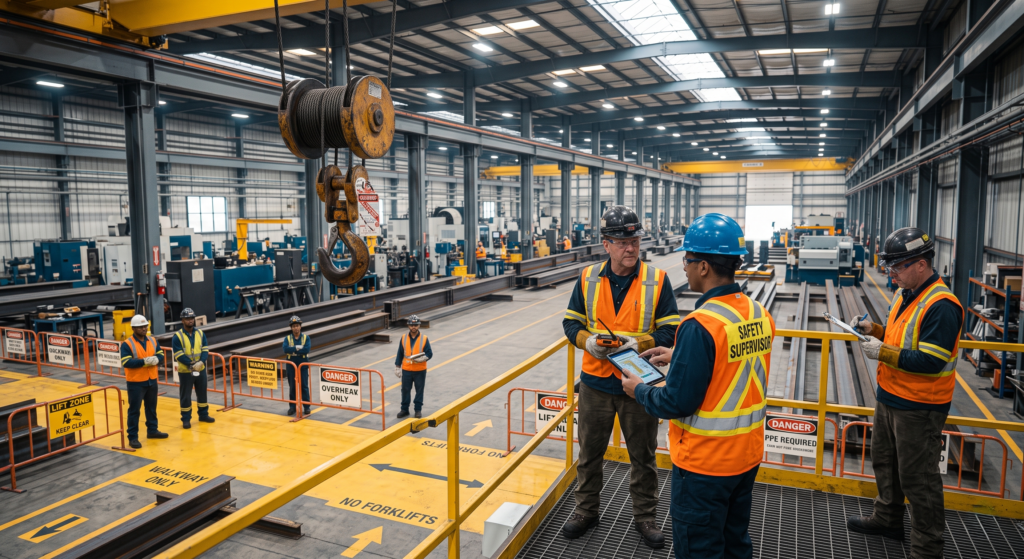
A clear and well-organised crane operating area helps prevent collisions, unsafe load movement, and workplace accidents before lifting begins.
10. Perform a No-Load Functional Test Before Lifting
A no-load functional test is the final verification step before beginning actual lifting operations. After completing all visual inspections, operators should run the crane without any suspended load to ensure that every movement and safety system functions correctly. This simple test helps identify hidden electrical or mechanical issues that may not be visible during a routine inspection.
During the test, operate the hoist, trolley, and bridge motions individually while observing the crane’s overall performance. Listen for unusual noises, check for smooth acceleration and stopping, verify proper brake response, and confirm that all control commands are executed accurately. If any abnormal vibration, delay, or unexpected movement is detected, the crane should be removed from service until the issue has been inspected and corrected.
Common Problems to Look For
- Abnormal vibration during crane movement.
- Unusual grinding, knocking, or squealing noises.
- Delayed response to operator commands.
- Irregular hoist, trolley, or bridge movement.
- Brake not holding the hook steadily after stopping.
- Safety devices or limit switches not responding correctly.
Best Inspection Practices
- Perform the functional test before the first lifting operation of every shift.
- Test all crane motions individually without a load.
- Verify smooth starting, stopping, and directional movement.
- Confirm proper operation of brakes, limit switches, and emergency stop functions.
- Listen carefully for any unusual sounds or vibrations.
- Immediately report and rectify any abnormal behaviour before resuming operations.
Preventive Maintenance Tips for Long-Term Crane Safety
While understanding individual maintenance procedures is important, the most effective way to maximise crane safety is through a well-planned preventive maintenance program. Waiting for a brake to fail before taking corrective action can lead to unplanned downtime, expensive repairs, equipment damage, and serious workplace hazards.
A structured preventive maintenance schedule ensures that every critical brake component—including brake linings, electromagnetic coils, air gaps, springs, electrical connections, and mechanical linkages—is inspected and serviced before performance begins to decline. Whether your crane is equipped with Speed-O-Controls SDM Brakes, SMG Brakes, or MDT Brakes, scheduled maintenance significantly improves reliability while extending the overall service life of the braking system.
Recommended Maintenance Schedule for Crane Braking Systems
Daily Checks
- Perform a visual inspection of the brake assembly before crane operation.
- Check for abnormal noises, vibration, or delayed brake response.
- Verify that the brake holds the load securely during normal lifting operations.
- Look for signs of oil, grease, or dust contamination around the brake.
- Report any unusual brake behaviour immediately.
Monthly Checks
- Measure brake lining wear and compare it with manufacturer recommendations.
- Inspect brake air gap and adjust if necessary.
- Tighten electrical terminals and inspect wiring for damage.
- Examine springs, pivot pins, and linkage assemblies for wear.
- Clean the complete brake assembly and surrounding components.
Annual Checks
- Perform a comprehensive inspection of the entire braking system.
- Replace worn brake linings, springs, and damaged mechanical parts where required.
- Test brake coil resistance and electrical performance.
- Verify brake holding capacity under rated operating conditions.
- Maintain detailed inspection records and update preventive maintenance documentation.
When Should Crane Safety Components Be Repaired or Replaced?
Regular inspections help identify early signs of wear, but not every damaged crane component can or should be repaired. Some issues, such as loose electrical connections or minor adjustments, can often be corrected through routine maintenance. However, components that directly affect crane safety should never be operated beyond their recommended service limits. Delaying replacement may increase the risk of equipment failure, workplace accidents, and costly production downtime.
A structured inspection program allows maintenance teams to determine whether a component can be safely repaired or if complete replacement is the better long-term solution. Decisions should always be based on the severity of the damage, the manufacturer’s recommendations, and applicable industrial safety standards rather than short-term cost savings.
Components That Commonly Require Immediate Replacement
- Wire ropes with broken strands, severe corrosion, or deformation.
- Crane hooks showing cracks, excessive wear, or throat opening beyond permissible limits.
- Damaged Pendant Push Button Stations with cracked housings or unresponsive controls.
- Faulty Limit Switches that fail to stop crane movement at the designated limit.
- Worn or malfunctioning crane brakes that cannot safely hold suspended loads.
- Radio Remote Controls with unreliable communication or defective emergency stop functions.
- Burnt electrical contactors, relays, or damaged wiring inside the Crane Control Panel.
Warning Signs That Should Never Be Ignored
- Repeated electrical faults during crane operation.
- Unusual grinding, knocking, or excessive vibration.
- Delayed response from crane controls.
- Frequent tripping of protective devices or circuit breakers.
- Visible structural damage to safety-critical components.
- Any condition that compromises safe lifting or operator control.
FAQs
1. How often should an EOT crane be inspected?
A visual pre-operation inspection should be performed before every shift. In addition, weekly, monthly, and annual preventive maintenance inspections should be carried out according to the crane manufacturer’s recommendations and applicable industrial safety standards.
2. What is the most important safety check before operating an EOT crane?
There isn’t a single most important check because every safety component works together. However, operators should always verify the Pendant Push Button Station, Emergency Stop Circuit, Braking System, Wire Rope & Hook Assembly, and Limit Switches before beginning lifting operations.
3. Why is a no-load functional test necessary?
A no-load functional test confirms that the crane’s electrical and mechanical systems are operating correctly before handling a suspended load. It helps identify hidden faults, unusual noises, abnormal vibrations, or delayed responses that may not be detected during a visual inspection alone.
4. Can an EOT crane be operated if a safety device is malfunctioning?
No. If any critical safety component—such as the Emergency Stop circuit, braking system, limit switches, or control devices—is not functioning correctly, the crane should be taken out of service until the issue has been repaired and verified by qualified maintenance personnel.
5. What are the most common causes of crane-related accidents?
Many crane incidents occur because of poor maintenance, skipped pre-operation inspections, overloaded lifting, operator error, damaged wire ropes, faulty controls, or failure of critical safety devices. Following a structured inspection routine significantly reduces these risks.
6. How can industries improve overall crane safety?
Organisations can improve crane safety by implementing daily inspection checklists, following preventive maintenance schedules, using high-quality crane components, providing regular operator training, and encouraging immediate reporting of any abnormal crane behaviour.
Key Takeaways
- Always perform a complete pre-operation inspection before every crane shift.
- Inspect critical safety components such as the Pendant Push Button Station, Emergency Stop Circuit, Braking System, Limit Switches, Wire Rope, Hook Assembly, and Crane Control Panel.
- Test all crane movements using a no-load functional test before handling actual loads.
- Ensure the crane travel path and work area remain clear of obstacles and unauthorised personnel.
- Follow a structured preventive maintenance schedule to improve equipment reliability and reduce unexpected downtime.
- Repair or replace damaged safety-critical components immediately rather than delaying corrective action.
- Regular inspections, proper operator training, and high-quality crane components together create a safer and more productive workplace.
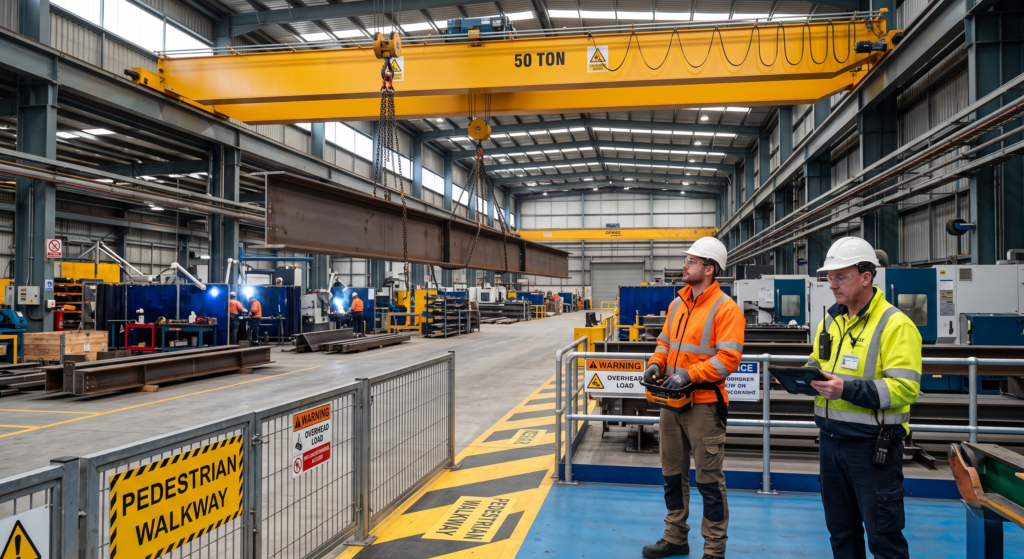
A combination of routine inspections, preventive maintenance, and safe operating practices ensures reliable and accident-free EOT crane operations.
Conclusion
Safe crane operations begin long before the first load is lifted. A systematic pre-operation inspection helps identify hidden faults, verify the performance of critical safety systems, and ensure that every crane component is ready for safe operation. Spending just a few minutes on daily inspections can significantly reduce the risk of workplace accidents, equipment damage, and unexpected production downtime.
By following these Top 10 Safety Checks Before Operating an EOT Crane, industries can improve operational efficiency, extend equipment service life, and create a safer working environment for operators, maintenance personnel, and everyone working around lifting operations. When combined with a structured preventive maintenance program and high-quality crane components, these inspections become an essential part of a reliable and safety-focused workplace.
Whether you’re operating a single workshop crane or managing multiple industrial lifting systems, making pre-operation inspections a daily habit is one of the simplest and most effective ways to ensure safe, efficient, and trouble-free crane performance.
Why Choose Speed-O-Controls?
Speed-O-Controls — over 40 years of expertise in manufacturing and supplying premium crane control equipment across India and global markets. From pendant push-button stations and limit switches to PLC-based crane control panels, radio remote control systems, and comprehensive crane revamping services — your complete crane control solutions partner
📧 sales@socgroup.in | 📞 +91-22-42469700 | 🌐 www.speedocontrols.com