Introduction
Industrial cranes operate under continuous mechanical and electrical stress, handling heavy loads in demanding working environments. Over time, critical crane components such as braking systems, limit switches, control devices, and safety accessories experience natural wear and performance degradation. Ignoring early warning signs can lead to unexpected breakdowns, production delays, and potential safety risks.
Timely replacement of worn or damaged crane spare parts is essential to maintain safe and reliable crane operation. Components that control movement, stopping, and safety functions must always perform accurately to ensure smooth lifting operations and protect both equipment and personnel.
From braking systems and limit switches to crane control components, selecting the right replacement parts plays an important role in improving equipment reliability and reducing maintenance costs. A planned replacement strategy helps industries avoid sudden failures and keeps their crane systems operating efficiently for longer periods.
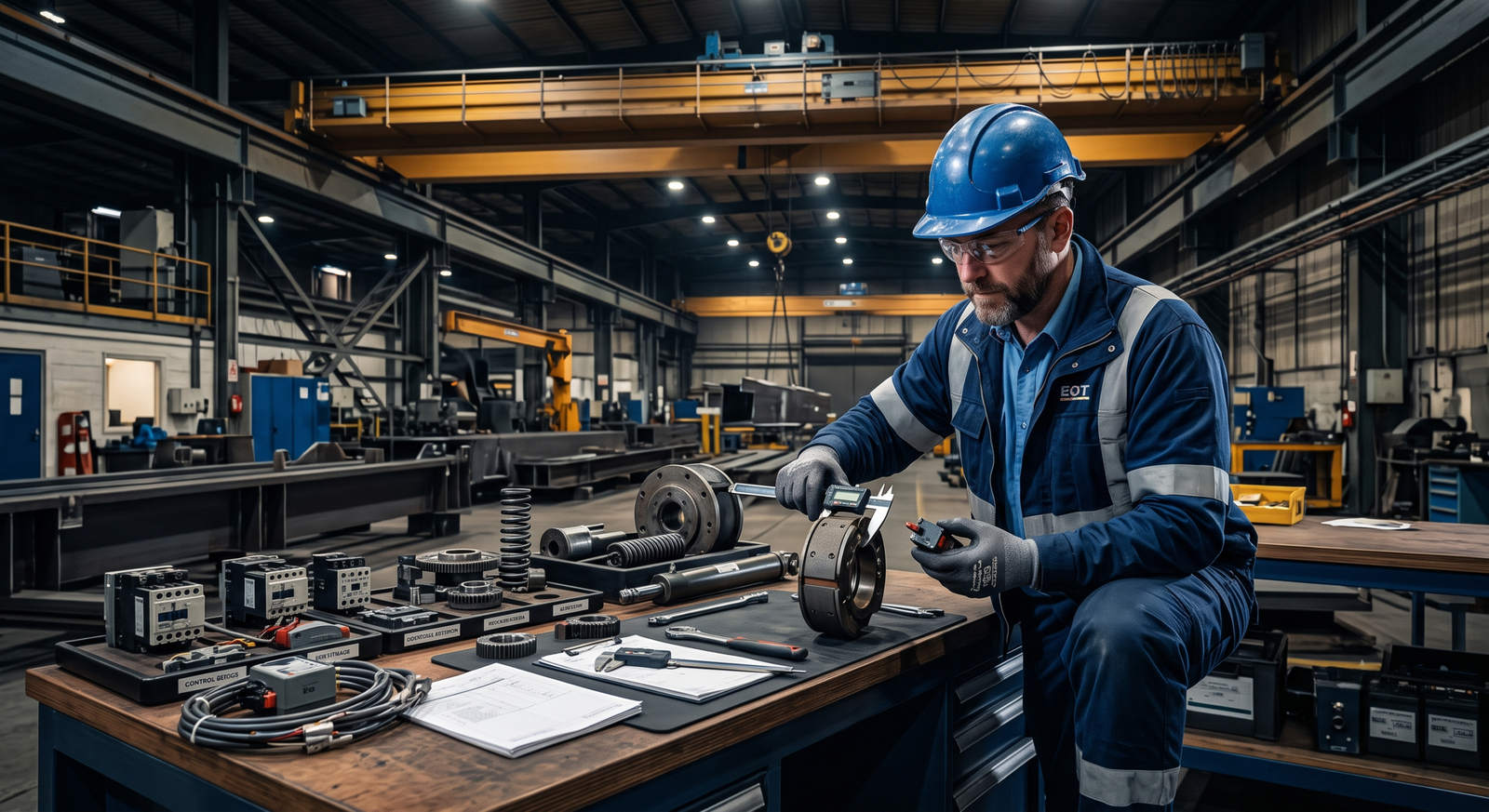
A maintenance engineer inspecting critical crane components to identify wear and replacement requirements.
Why Timely Replacement of Crane Components Is Important
Crane components are designed to perform under heavy loads and continuous operating conditions, but no component can maintain its original performance forever. Regular usage, environmental conditions, vibration, dust, and mechanical stress gradually affect the efficiency and reliability of crane parts. Identifying when a component requires replacement is essential to prevent minor issues from developing into major operational failures.
Replacing worn or damaged crane spare parts at the right time provides multiple benefits, including improved safety, reduced downtime, and better overall equipment performance. A failed safety component such as a brake, limit switch, or control device can interrupt operations and create unsafe working conditions if not addressed immediately.
Key Benefits of Timely Crane Spare Parts Replacement
1. Improves Workplace Safety
Safety-critical crane components directly affect lifting operations. Worn brakes, faulty limit switches, or damaged control devices can reduce operator control and increase the possibility of accidents. Replacing these components before failure ensures that essential safety functions continue to operate correctly.
2. Reduces Unexpected Downtime
Sudden component failure can stop crane operations and affect production schedules. Planned replacement of ageing parts allows maintenance teams to schedule repairs during convenient periods, reducing unexpected breakdowns and improving operational efficiency.
3. Extends Crane Equipment Life
Using properly maintained and reliable replacement components reduces stress on other crane systems. Timely replacement prevents small faults from damaging connected components and helps extend the overall service life of the crane.
4. Maintains Consistent Performance
Crane systems depend on multiple components working together smoothly. Replacing worn parts ensures accurate control, reliable movement, and consistent performance during daily lifting operations.
Critical Crane Components That Require Replacement
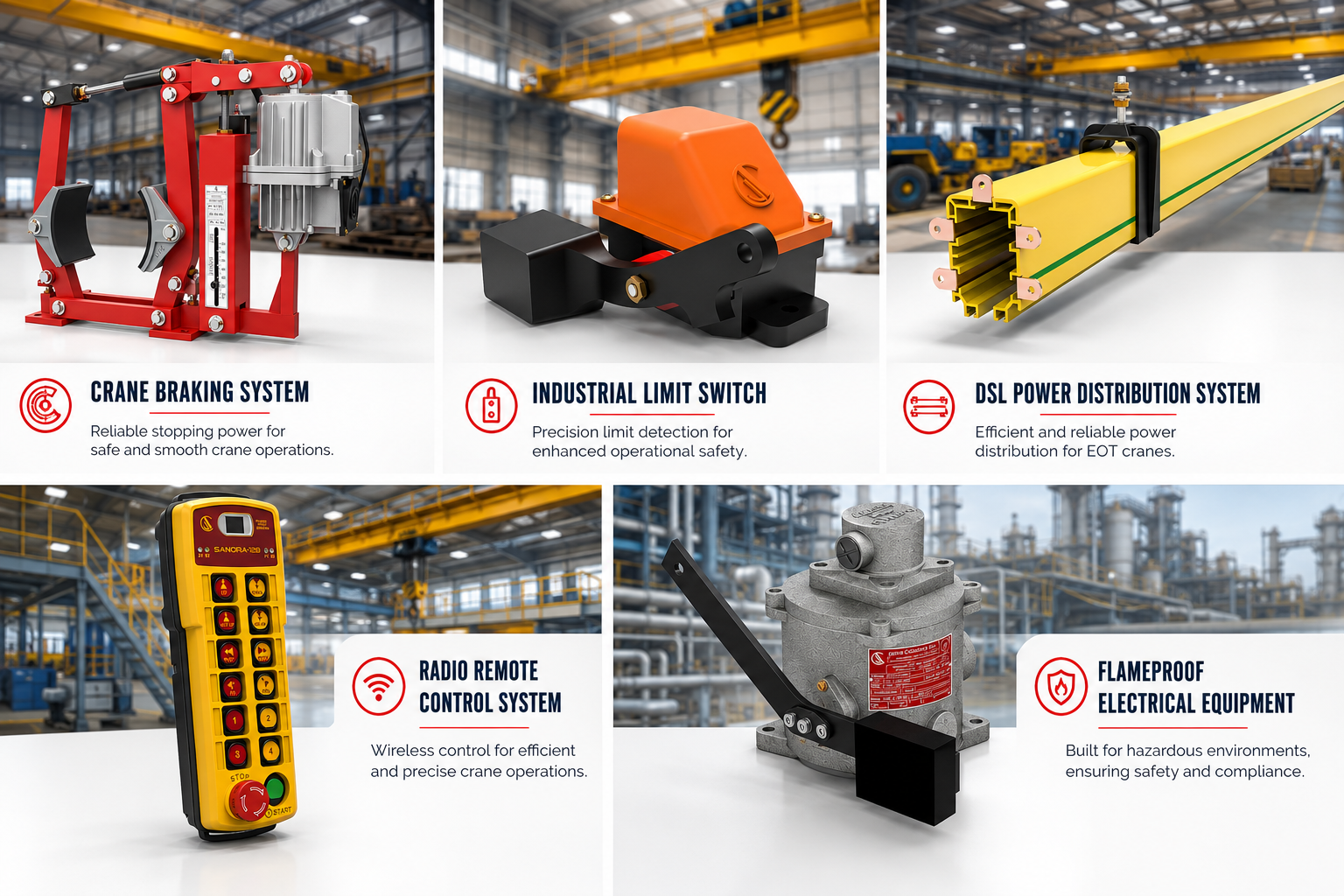
Critical crane components include braking systems, limit switches, power distribution systems, and control solutions that ensure safe and reliable crane operation.
1. Crane Braking Systems
Sticky, loo The braking system is one of the most important safety components of an EOT crane. It controls the stopping and holding of loads during lifting operations, ensuring smooth movement and preventing unwanted load movement when the crane is stopped. Over time, continuous operation, friction, and environmental conditions can reduce brake performance, making timely inspection and replacement essential.
Signs such as delayed stopping, slipping, unusual noise, overheating, or reduced holding capacity indicate that the braking system requires immediate attention. Replacing worn braking components at the right time helps maintain safe load control and prevents unexpected operational failures.
For reliable industrial applications, Speed-O-Controls offers advanced braking solutions including SDM Series Industrial Drum Brakes, SMG Series Brake, and MDT Series Brake, designed to provide dependable braking performance for demanding crane operations.
Common Signs That Brake Replacement May Be Required
- Reduced braking efficiency or delayed stopping.
- Brake slipping while holding a load.
- Excessive noise or vibration during operation.
- Visible wear or damage in brake components.
- Overheating during continuous crane operation.
- Frequent adjustment requirements.
Replacement Best Practices
- Inspect brake performance regularly during scheduled maintenance.
- Replace worn brake components before safety is compromised.
- Use suitable brake specifications according to crane application.
- Ensure proper installation and testing after replacement.
- Verify smooth engagement and release after maintenance.
2. Crane Limit Switches
Limit switches are essential safety components used in EOT cranes to control and restrict the movement of different crane mechanisms. They help prevent over-travel situations by stopping crane movement at predefined positions, reducing the risk of collisions, mechanical damage, and unsafe operating conditions.
Since limit switches operate repeatedly during daily crane movements, their internal mechanical parts and electrical contacts can experience wear over time. A faulty limit switch may result in inaccurate stopping, delayed response, or failure of an important safety function. Regular inspection and timely replacement are necessary to maintain accurate crane movement and reliable protection.
Speed-O-Controls provides reliable industrial switching solutions such as Rotary Limit Switches, Lever Limit Switches, and Roller Limit Switches, designed for accurate position control and dependable performance in demanding crane applications.
Common Signs That Limit Switch Replacement May Be Required
- Crane movement does not stop at the required position.
- Delayed or inconsistent switch response.
- Damaged actuator, lever, or roller mechanism.
- Excessive wear due to continuous operation.
- Loose electrical connections or contact failure.
- Physical damage to the switch housing.
Replacement Best Practices
- Inspect limit switches regularly according to operating conditions.
- Replace switches showing mechanical damage or inconsistent operation.
- Ensure the replacement switch matches the crane application requirements.
- Check proper alignment and mounting after installation.
- Test crane movement limits after replacement.
3. DSL (Power Distribution System)
The DSL (Power Distribution System) is a critical electrical component used in EOT cranes to provide a continuous power supply to moving crane equipment. It ensures reliable electricity distribution between the fixed power source and travelling crane systems, allowing smooth operation of motors, controls, and other electrical components.
Since DSL systems operate continuously along crane travel paths, they are exposed to mechanical movement, dust, vibration, and environmental conditions. Over time, conductor wear, collector damage, misalignment, or electrical issues can affect power transmission and reduce crane reliability. Timely inspection and replacement of worn DSL components help prevent unexpected power interruptions and operational delays.
A damaged power distribution system may cause intermittent crane operation, sudden power loss, sparking, or irregular movement. Replacing worn components with suitable industrial-grade solutions ensures a stable power supply and improves the overall performance of the crane system.
Common Signs That DSL Replacement May Be Required
- Frequent power interruption during crane movement.
- Visible wear or damage on conductor rails.
- Excessive sparking from current collectors.
- Irregular crane operation due to unstable power supply.
- Damaged collector shoes or mechanical components.
- Loose connections or overheating at electrical contact points.
Replacement Best Practices
- Inspect DSL components regularly based on crane usage conditions.
- Check conductor alignment and collector movement.
- Replace worn contact parts before they fail.
- Ensure proper installation and electrical connections.
- Verify smooth power transfer after replacement.
4. Radio Remote Control Systems
Radio Remote Control Systems have transformed EOT crane operations by providing operators with improved flexibility, better visibility, and safer control over lifting activities. Unlike traditional wired controls, wireless remote systems allow operators to control crane movements from a suitable operating position while maintaining better awareness of the surrounding work environment.
However, in industries where multiple operators, heavy machinery, and safety-critical operations are involved, controlling unauthorised access becomes equally important. Modern crane radio remote systems with advanced authentication features help ensure that only authorised personnel can operate the crane, reducing the risk of incorrect operation and improving workplace safety.
Over time, radio remote control components may require replacement due to continuous usage, environmental exposure, physical damage, or communication-related issues. Problems such as delayed response, signal interruption, damaged transmitters, or receiver faults can affect crane performance and should be addressed immediately.
Speed-O-Controls offers advanced Radio Remote Control Systems with biometric authentication technology, providing secure operator identification and controlled access before crane operation. This additional security layer ensures that only verified users can access crane controls, making the system suitable for safety-focused industrial applications.
Common Signs That Radio Remote Control Replacement May Be Required
- Frequent signal interruption between transmitter and receiver.
- Delayed response during crane operation.
- Damaged transmitter housing or control buttons.
- Unresponsive control commands.
- Reduced communication range.
- Battery or power-related issues.
- Failure of authentication or access control features.
Benefits of Advanced Radio Remote Control Systems
Secure Operator Authentication
Biometric authentication ensures that only authorised operators can activate and control the crane system. This helps prevent unauthorised usage and improves operational accountability.
Improved Operator Safety
Wireless operation allows operators to maintain a safer distance from the load and crane movement area while maintaining complete control.
Better Operational Flexibility
Operators can control crane movements from a suitable position with improved visibility, making lifting operations more efficient and precise.
Reduced Risk of Human Error
Controlled access and reliable command transmission help minimise incorrect operation and improve overall crane safety.
Replacement Best Practices
- Inspect transmitter and receiver units regularly for physical damage.
- Check communication reliability between remote and crane system.
- Verify authentication functionality after maintenance.
- Replace damaged components with compatible industrial-grade systems.
- Test all crane movements and safety functions before operation.
5. Flameproof Products
Flameproof products play an important role in industries where cranes operate in hazardous environments containing flammable gases, vapours, or combustible materials. These specialised components are designed to provide additional protection by preventing internal sparks or electrical faults from becoming a source of ignition, helping maintain safer industrial operations.
In demanding environments such as chemical plants, oil & gas facilities, paint industries, and other hazardous locations, flameproof components require regular inspection to ensure their protective integrity remains intact. Damage to enclosures, sealing systems, cable entries, or electrical components can reduce their effectiveness and may require timely replacement.
Speed-O-Controls offers a range of reliable Flame Proof Products designed for industrial crane applications, including FLP Limit Switches, Flameproof Radio Remote Control Systems, Flameproof Thruster Brakes, FLAME PROOF PENDANT PUSH BUTTON, and FLP Panels. These solutions help industries maintain safer crane operations in hazardous working conditions.
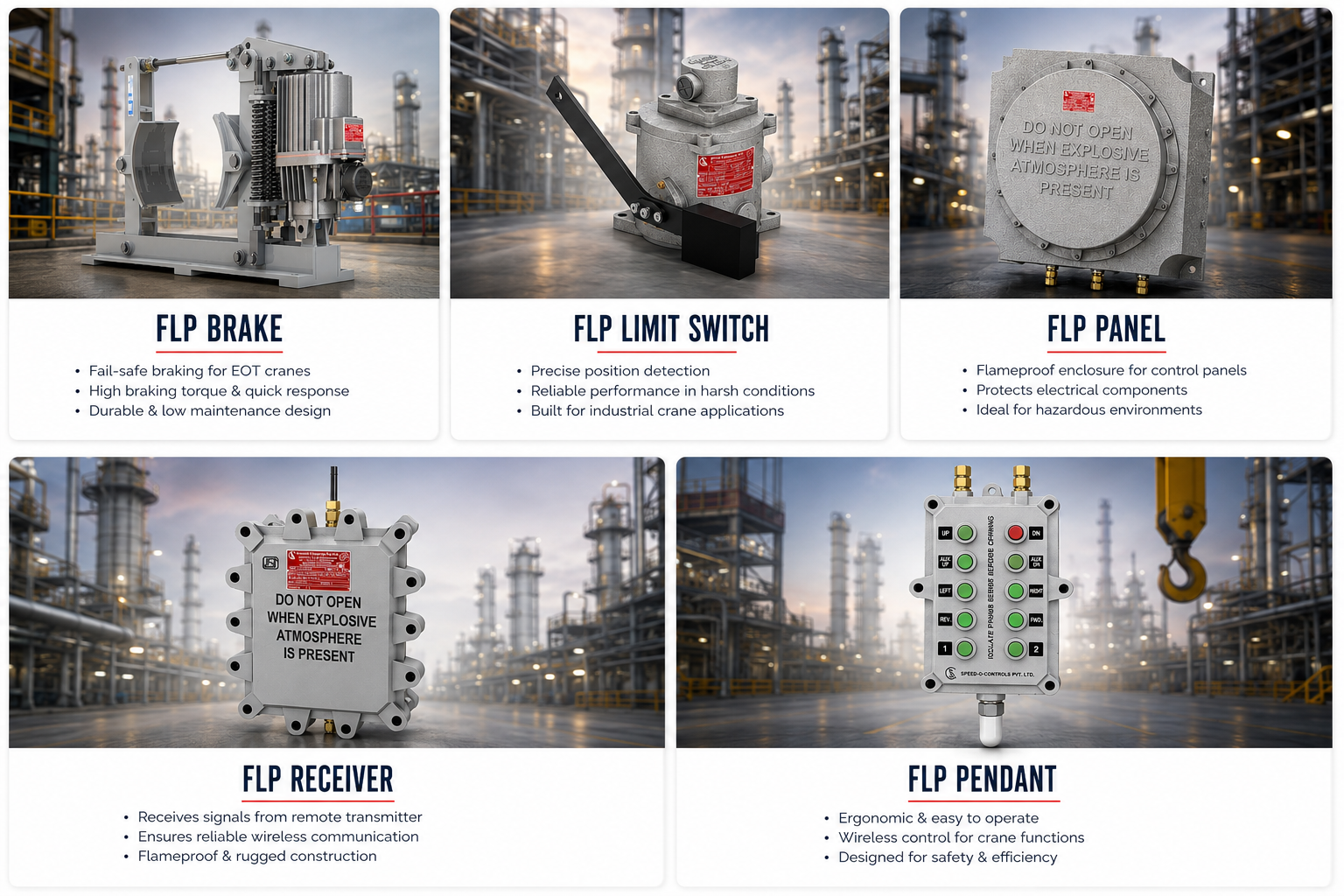
Flameproof crane components are designed to provide reliable and safe operation in hazardous industrial environments.
Common Signs That Flameproof Product Replacement May Be Required
- Damaged or cracked flameproof enclosure.
- Corrosion affecting the protective housing.
- Damaged cable glands or sealing components.
- Electrical malfunction inside the flameproof equipment.
- Loose or improper connections.
- Loss of protection due to unauthorised modifications.
- Reduced performance in hazardous operating conditions.
Replacement Best Practices
- Inspect flameproof equipment regularly for physical damage.
- Replace components only with suitable certified flameproof products.
- Check enclosure sealing and cable entry points.
- Avoid unauthorised repairs or modifications.
- Verify proper installation and functionality after replacement.
- Maintain inspection records for hazardous area equipment.
Signs That Indicate Crane Parts Need Replacement
Identifying early warning signs of component wear is essential for maintaining safe and efficient crane operations. Many crane failures do not happen suddenly; they usually develop through small performance changes that are often ignored during regular operation.
Regular inspection and monitoring help maintenance teams identify when crane spare parts require replacement before they lead to major breakdowns, production losses, or safety concerns.
1. Unusual Noise or Vibration
Abnormal sounds or excessive vibration during crane operation can indicate wear in mechanical and electrical components. Issues such as brake wear, damaged moving parts, or misaligned components should be inspected immediately to prevent further damage.
2. Reduced Performance or Slow Response
Delayed crane movement, slower response from control systems, or inconsistent operation may indicate that critical components are reaching the end of their service life. Timely replacement helps restore smooth and accurate crane performance.
3. Frequent Breakdowns and Maintenance Requirements
If a crane component requires repeated repairs or adjustments, replacement may be a more effective solution. Continuously repairing worn parts can increase maintenance costs and result in unexpected downtime.
4. Visible Damage or Wear
Physical damage such as cracks, corrosion, worn-out surfaces, damaged cables, or deteriorated enclosures is a clear indicator that a component requires inspection and possible replacement.
5. Safety Function Failure
Components responsible for crane safety, including brakes, limit switches, and control systems, should never be ignored when performance issues occur. Any failure in safety-related equipment requires immediate attention to maintain safe operation.
Repair vs Replacement: Making the Right Decision
When a crane component shows signs of wear or performance issues, maintenance teams often face a common decision: should the component be repaired or completely replaced? Choosing the correct approach depends on factors such as component condition, safety importance, failure frequency, and overall operational requirements.
While minor issues can often be corrected through repair or adjustment, safety-critical components that show significant wear should be replaced to maintain reliable crane performance and prevent unexpected failures.
When Repair Can Be a Suitable Option
Repairing a crane component may be effective when the issue is minor and does not affect the safety or reliability of the equipment. Examples include:
- Loose electrical connections.
- Minor adjustments required in mechanical components.
- Replacement of small serviceable parts.
- Calibration or alignment issues.
Repair can help reduce short-term maintenance costs when the component remains structurally safe and performs according to required operating conditions.
When Replacement Is the Better Choice
Replacement becomes necessary when a component reaches the end of its service life or when continued repair can affect safety and reliability. Situations requiring replacement include:
- Repeated component failures.
- Damaged safety-critical parts.
- Excessive wear or corrosion.
- Reduced operational performance.
- Loss of reliable functionality.
For components such as crane brakes, limit switches, DSL systems, radio remote controls, and flameproof products, timely replacement ensures better safety and consistent performance.
| Condition | Recommended Action |
| Minor adjustment issue | Repair |
| Loose connection or wiring issue | Repair |
| Repeated failure after repair | Replacement |
| Damaged safety component | Replacement |
| Component performance below required level | Replacement |
| Severe physical damage or corrosion | Replacement |
How to Choose the Right Replacement Crane Components
Selecting the correct replacement components is essential for maintaining the safety, reliability, and performance of an EOT crane system. Using unsuitable or low-quality parts may lead to frequent failures, increased maintenance requirements, and reduced operational efficiency.
Before replacing any crane component, maintenance teams should evaluate factors such as crane specifications, operating conditions, safety requirements, and component compatibility. Choosing the right crane spare parts ensures smooth operation and helps extend the overall service life of the equipment.
1. Check Compatibility With Existing Crane Systems
Every crane system has specific operating requirements. Replacement components should match the existing crane configuration, electrical specifications, load capacity, and application requirements to ensure proper functionality.
Using compatible components reduces installation issues and improves overall system reliability.
2. Consider Operating Environment
Industrial environments can vary significantly depending on application areas. Factors such as dust, moisture, temperature, vibration, and hazardous conditions should be considered while selecting replacement components.
For example, industries operating in hazardous areas may require specialised solutions such as flameproof products to maintain safe operation.
3. Prioritise Quality and Reliability
Crane components directly affect operational safety and productivity. Selecting reliable industrial-grade products helps reduce unexpected failures and ensures consistent performance under demanding working conditions.
Critical components such as braking systems, limit switches, power distribution systems, and control devices should always be selected based on performance and reliability.
Preventive Maintenance Tips to Extend Component Life
While timely replacement of worn crane components is essential, implementing a preventive maintenance program can significantly extend the service life of critical parts and reduce unexpected equipment failures. Regular inspections and proper maintenance practices help identify potential issues before they affect crane performance or workplace safety.
A well-planned maintenance schedule not only minimises downtime but also improves operational efficiency and reduces long-term maintenance costs.
1. Perform Routine Inspections
Inspect critical crane components such as braking systems, limit switches, DSL systems, radio remote controls, and flameproof products at regular intervals. Early detection of wear or damage helps prevent unexpected failures.
2. Keep Components Clean
Dust, grease, moisture, and industrial contaminants can affect the performance of electrical and mechanical components. Regular cleaning helps maintain reliable operation and extends component life.
3. Replace Worn Components Before Failure
Do not wait for a complete breakdown before replacing safety-critical parts. Planned replacement based on inspection results is safer and more cost-effective than emergency repairs.
4. Maintain Inspection and Service Records
Documenting inspections, repairs, and component replacements helps maintenance teams monitor equipment condition, identify recurring issues, and schedule future maintenance more efficiently.
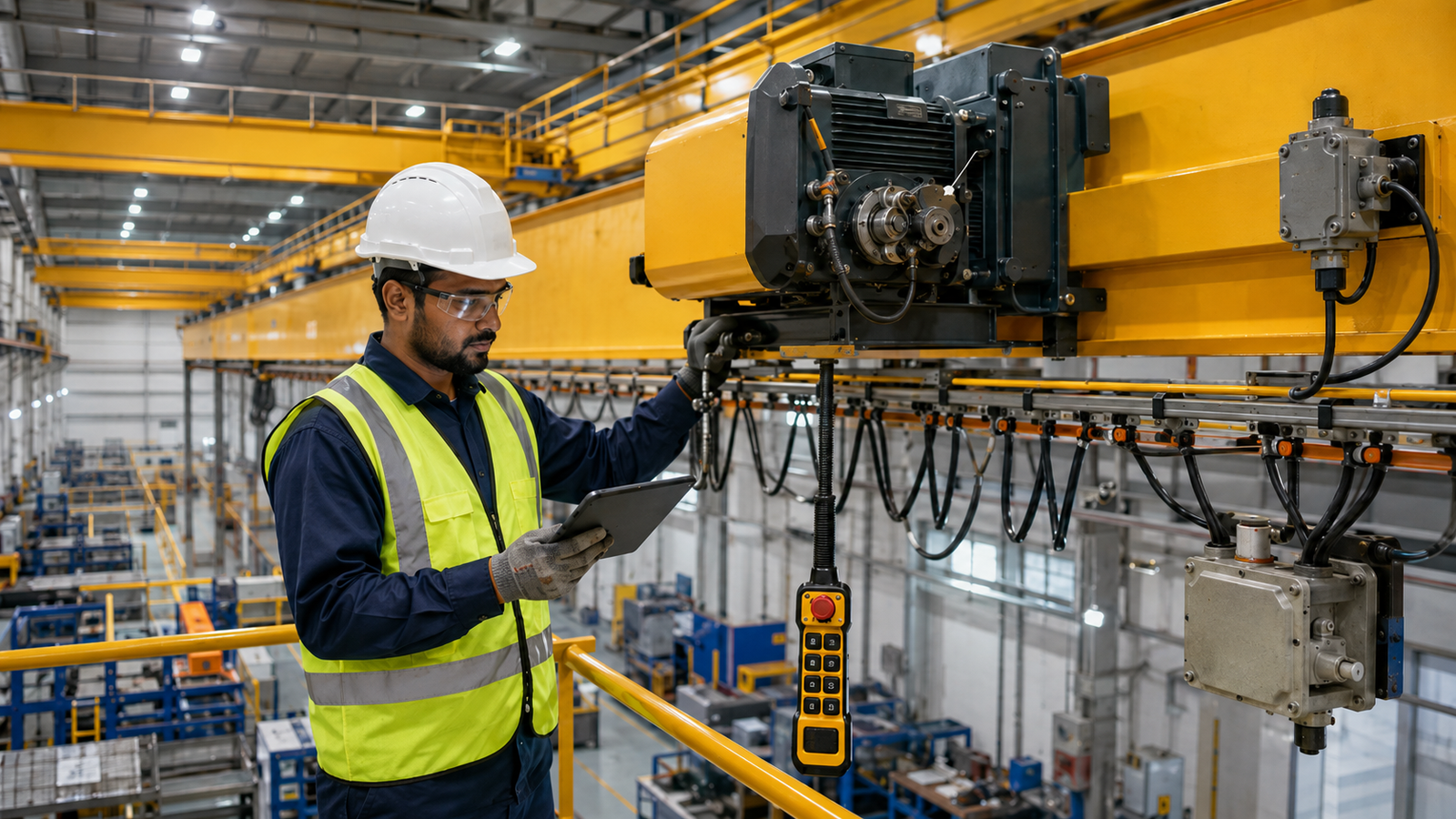
Routine inspection and preventive maintenance help maximise the service life of critical crane components while improving operational safety.
Frequently Asked Questions (FAQs)
1. How often should crane spare parts be inspected or replaced?
The inspection frequency depends on crane usage, operating conditions, and the working environment. Safety-critical components should be inspected regularly and replaced whenever signs of wear, damage, or reduced performance are observed.
2. Which crane components require the most frequent inspection?
Components such as braking systems, limit switches, DSL power distribution systems, radio remote controls, and flameproof products should be inspected periodically to ensure safe and reliable crane operation.
3. Is it better to repair or replace damaged crane components?
Minor faults can often be repaired, but components that repeatedly fail, show excessive wear, or affect crane safety should be replaced to maintain long-term reliability and operational efficiency.
4. Why should industries choose high-quality replacement crane components?
High-quality replacement components improve equipment reliability, reduce unexpected downtime, enhance workplace safety, and help extend the overall service life of crane systems.
Key Takeaways
- Inspect crane spare parts regularly to identify wear before it affects crane performance.
- Replace safety-critical components such as braking systems, limit switches, DSL systems, radio remote controls, and flameproof products at the right time.
- Timely replacement minimises unexpected downtime and improves workplace safety.
- Select compatible, high-quality replacement components for reliable long-term performance.
- Follow a preventive maintenance schedule instead of waiting for complete component failure.
- Partner with a trusted manufacturer to ensure dependable crane operation and easier maintenance.
Conclusion
Maintaining the reliability of an EOT crane goes beyond routine maintenance—it requires the timely replacement of critical components before they affect safety or productivity. Regular inspection of crane braking systems, limit switches, DSL power distribution systems, radio remote controls, and flameproof products helps industries minimize unexpected downtime, improve operational efficiency, and ensure safe material handling.
By selecting high-quality replacement components and following a preventive maintenance strategy, industries can extend equipment life, reduce maintenance costs, and maintain consistent crane performance even in demanding working environments.
At Speed-O-Controls, we offer a comprehensive range of crane control and safety solutions, including SDM Series Industrial Drum Brakes, SMG Series Brakes, MDT Series Brakes, Limit Switches, DSL Power Distribution Systems, Radio Remote Control Systems, and Flameproof Products, designed to support reliable, safe, and efficient crane operations across various industries.
Why Choose Speed-O-Controls?
Speed-O-Controls — over 40 years of expertise in manufacturing and supplying premium crane control equipment across India and global markets. From pendant push-button stations and limit switches to PLC-based crane control panels, radio remote control systems, and comprehensive crane revamping services — your complete crane control solutions partner
📧 sales@socgroup.in | 📞 +91-22-42469700 | 🌐 www.speedocontrols.com